Brief Architecture
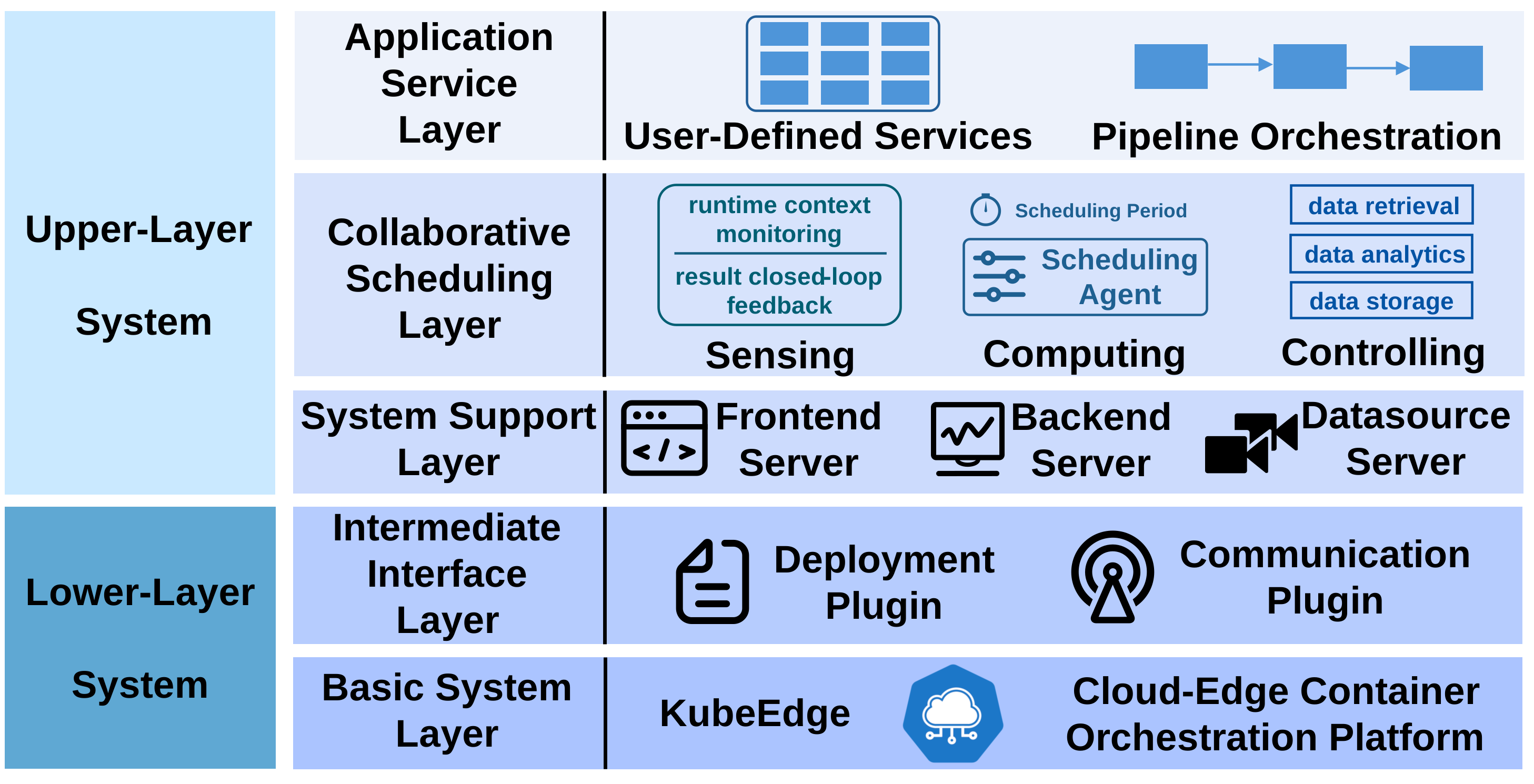
Dayu uses a five-layer architecture. The basic system layer and intermediate interface layer form the lower-layer platform for cluster orchestration, runtime deployment, and cross-node communication. The system support layer, collaboration scheduling layer, and application service layer form the upper-layer system that users configure and operate.
Runtime flow
- Operators start the support services and select the datasource, DAG, scheduling policy, and target nodes.
- Dayu deploys the required runtime services across cloud and edge nodes and confirms that the application runtime is ready.
- Stream data becomes tasks that move through the DAG according to the selected scheduling decisions.
- Controlled runtime updates adjust execution placement while allowing in-flight work to complete consistently.
- Results and telemetry are collected for visualization, analysis, and further policy evaluation.
Layer responsibilities
- Basic System Layer provides the cluster substrate across cloud and edge nodes.
- Intermediate Interface Layer provides runtime deployment and cross-node service communication.
- System Support Layer provides the user interface, system control, datasource management, and platform state.
- Collaboration Scheduling Layer coordinates task generation, scheduling, execution, result delivery, and resource observation.
- Application Service Layer provides user-composable AI services through common interfaces and templates.
For implementation-level lifecycle and API details, see the repository documentation.